Gun actions are the mechanical systems that control how firearms load, fire, extract, and eject cartridges. Understanding these different operating mechanisms is essential for anyone interested in firearms, whether for hunting, sport shooting, collecting, or educational purposes. Each type of gun action offers distinct advantages and characteristics that make them suitable for different applications.
What Are Gun Actions?
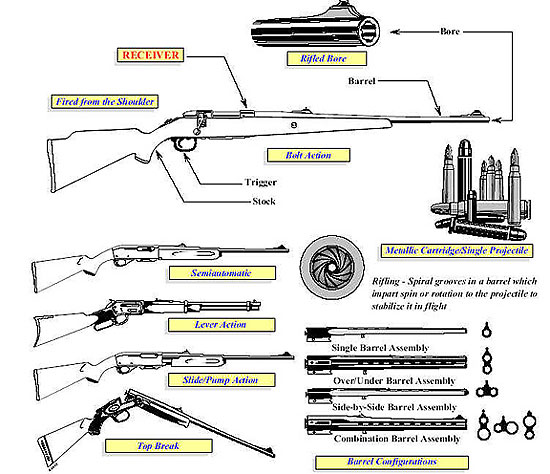
Gun actions refer to the operating mechanism of a firearm that handles the loading, firing, extraction, and ejection of cartridges. These systems determine how quickly a firearm can be fired, how reliable it is under various conditions, and what type of ammunition it can accommodate. The choice of gun action significantly impacts the firearm’s performance, maintenance requirements, and intended use.
Manual Gun Actions
Bolt Action
Bolt action firearms feature a manually operated handle that the shooter must cycle between shots. This system involves lifting the bolt handle, pulling it back to extract the spent cartridge, pushing it forward to chamber a new round, and lowering the handle to lock the bolt in place. Bolt action gun actions are renowned for their accuracy and reliability, making them popular among hunters and precision shooters.
The bolt action system provides excellent mechanical strength, allowing it to handle powerful cartridges safely. The tight lockup between the bolt and barrel contributes to superior accuracy, which is why bolt action rifles dominate long-range shooting competitions. However, the manual operation results in a slower rate of fire compared to semi-automatic systems.
Lever Action
Lever action gun actions operate through a lever mechanism integrated into the trigger guard area. The shooter cycles the action by moving the lever downward and forward, which extracts the spent cartridge and chambers a new round. This system became famous through Western films and remains popular among hunters and cowboy action shooters.
Lever action firearms offer a good balance between speed and reliability. They typically hold more rounds than bolt action rifles while maintaining reasonable accuracy for hunting distances. The smooth operation of a well-maintained lever action allows for relatively quick follow-up shots, making them effective for brush hunting and medium-range shooting.
Pump Action
Pump action gun actions, also known as slide action, require the shooter to manually cycle the action by moving the fore-end back and forth. This system is most commonly found in shotguns, though pump action rifles exist as well. The pumping motion extracts the spent shell and chambers a new round from the magazine.
Pump action firearms provide reliable operation under adverse conditions and offer good control over the firing sequence. They’re particularly popular in law enforcement and home defense applications due to their dependability and the distinctive sound of the action cycling, which can serve as a deterrent.
Semi-Automatic Gun Actions
Semi-automatic gun actions use the energy from firing a cartridge to automatically cycle the action, extracting the spent case and chambering a new round. However, the trigger must be pulled for each shot, distinguishing semi-automatic from fully automatic firearms. These systems offer faster follow-up shots while maintaining shooter control over each round fired.
Gas-Operated Systems
Gas-operated gun actions redirect a portion of the expanding gases from the fired cartridge to operate the action. A gas tube or piston system captures these gases and uses them to cycle the bolt or operating mechanism. This system is widely used in military and civilian rifles due to its reliability and effectiveness with various ammunition types.
The gas-operated system provides consistent cycling across different ammunition weights and environmental conditions. Popular examples include the AR-15 platform and AK-47 family of rifles, both of which utilize gas-operated gun actions with slight variations in their specific mechanisms.
Blowback Systems
Blowback gun actions rely on the pressure generated by the fired cartridge to push the bolt or slide backward, extracting the spent case and compressing the recoil spring. As the spring returns the bolt forward, it strips a new cartridge from the magazine and chambers it. This system is commonly used in pistols and submachine guns.
Blowback systems are simpler and less expensive to manufacture than gas-operated systems, making them popular in rimfire rifles and many pistol designs. However, they’re generally limited to lower-pressure cartridges due to the direct transmission of chamber pressure to the operating mechanism.
Recoil-Operated Systems
Recoil-operated gun actions utilize the recoil force generated by firing to cycle the action. The barrel and bolt initially move together rearward, then separate at a predetermined point to complete the extraction and ejection cycle. This system is often found in larger caliber pistols and some rifles.
Automatic Gun Actions
Automatic gun actions continue to fire as long as the trigger is held and ammunition is available. These systems are heavily regulated in civilian markets and primarily used by military and law enforcement agencies. The mechanical principles are similar to semi-automatic systems, but the trigger mechanism allows for continuous firing.
Full-auto gun actions require robust construction to handle the stress of rapid firing and typically incorporate features like quick-change barrels to manage heat buildup. The high rate of fire makes ammunition consumption rapid and requires careful attention to barrel heating and mechanical wear.
Specialized Gun Actions
Break Action
Break action gun actions feature a hinge mechanism that allows the barrel to pivot downward for loading and unloading. This system is common in shotguns, combination guns, and some rifles. The simplicity of break action designs makes them reliable and easy to maintain, though they typically hold fewer rounds than other systems.
Revolver Action
Revolver gun actions use a rotating cylinder to align cartridges with the barrel and firing pin. The cylinder rotates either through double-action trigger pulls or manual cocking of the hammer. This system provides reliable ignition and the ability to use different cartridge types in the same firearm.
Choosing the Right Gun Action
Selecting the appropriate gun action depends on intended use, shooting skill level, and personal preferences. Hunters might prefer bolt action rifles for their accuracy, while sport shooters might choose semi-automatic systems for faster follow-up shots. Understanding gun actions helps shooters make informed decisions about their firearms and develop proper handling techniques for each system.
The diversity of gun actions reflects centuries of firearms development and the varying needs of shooters. Each system represents engineering solutions to specific challenges in firearm design, from accuracy and reliability to speed and ease of use. Whether for hunting, sport, or collection, understanding these mechanical systems enhances appreciation for firearm technology and promotes safe, effective use.